

The presence of the Balkan loach (Cobitis elongata) in the Cerna River catchment was discovered during the project “Identifying barriers in five catchments in the Southern Carpathians, Romania”, coordinated by Rewilding Romania in partnership with the Aqua Crisius Association. The finding complements the study carried out by the Aqua Crisius team between 2020 and 2024.
Assessment of the fish fauna
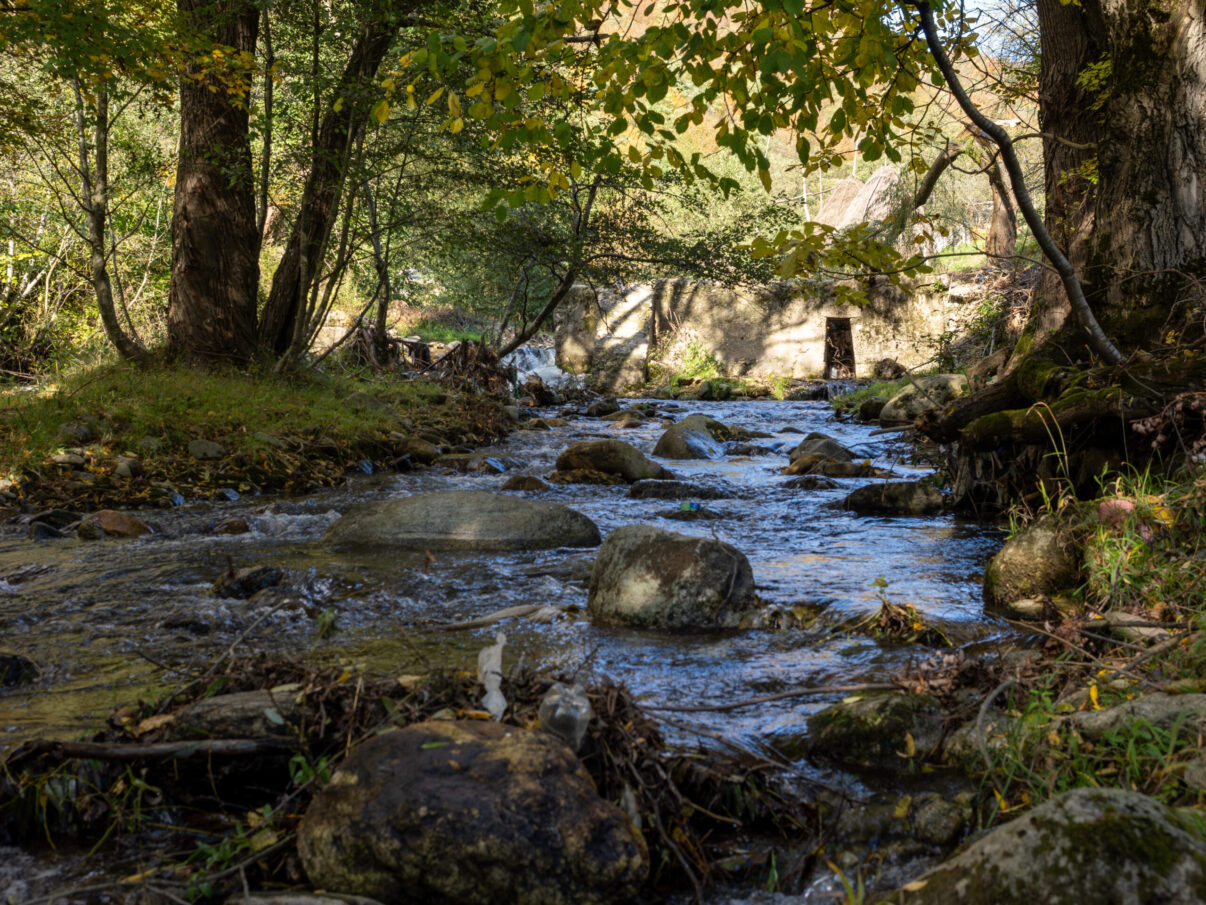
A fish fauna survey was conducted by the Aqua Crisius Association in the lower sector of the Cerna River, between its confluence with the Belareca River, its main tributary, and its mouth in the Danube. Initially, the study aimed to assess fish communities in the context of infrastructure development. It later expanded to include the monitoring of fish populations within the project “Identifying barriers in five catchments in the Southern Carpathians, Romania”, coordinated by the Rewilding Romania Foundation under the Open Rivers Programme.
The Cerna is a medium-sized river with an average discharge and a single main tributary, the Belareca. Two dams along its course form the Valea Iovanului and Herculane reservoirs, while a third dam is currently under construction on the Belareca. This section has recently undergone river regulation works. The fact that the study area is influenced by hydrotechnical structures and alterations of the natural river course makes it particularly relevant for assessing the effects of fragmentation on aquatic biodiversity.
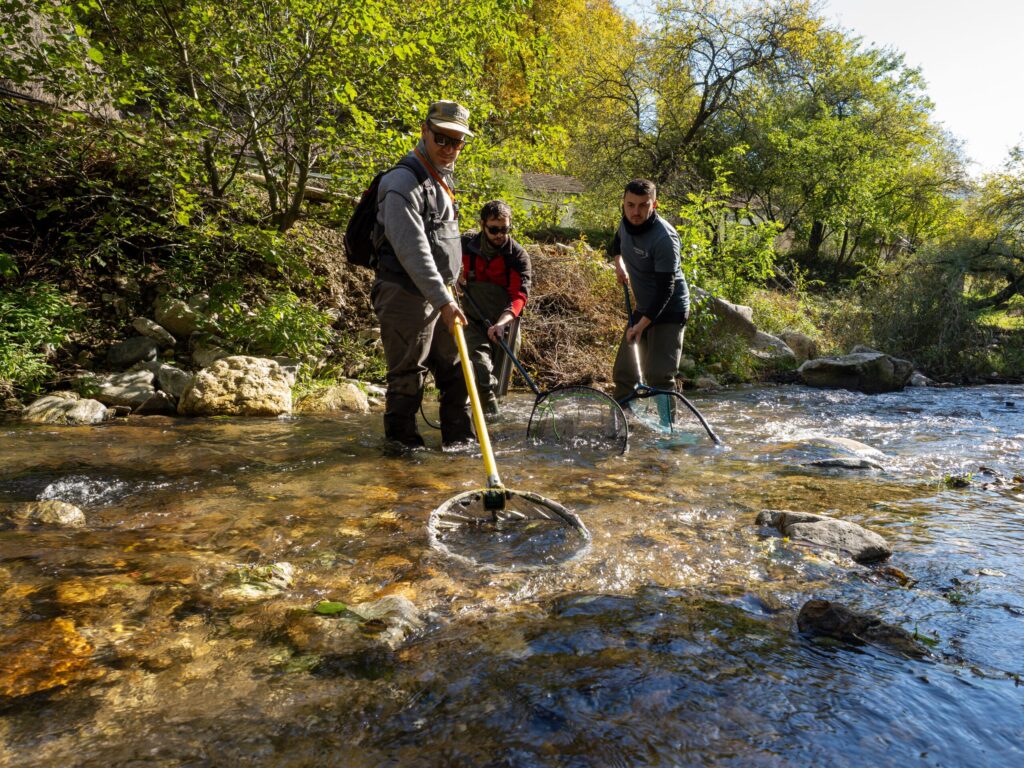
Field research was carried out between 2020 and 2024 at four sampling stations along approximately 12 km of river, using standardised scientific fishing methods. All specimens were identified and released back into their natural habitat. Nineteen fish species were recorded, seven of which are migratory species from the Danube. The study also showed that the invasive species the western tubenose goby (Proterorhinus semilunaris) and the round goby (Neogobius melanostomus) are expanding and may affect native species through competition and predation. The Danube gudgeon (Romanogobio uranoscopus) was recorded only rarely, and hydrotechnical works negatively impacted its presence. The first record of the Balkan loach (Cobitis elongata) represents a significant contribution to the faunistic knowledge of this catchment.
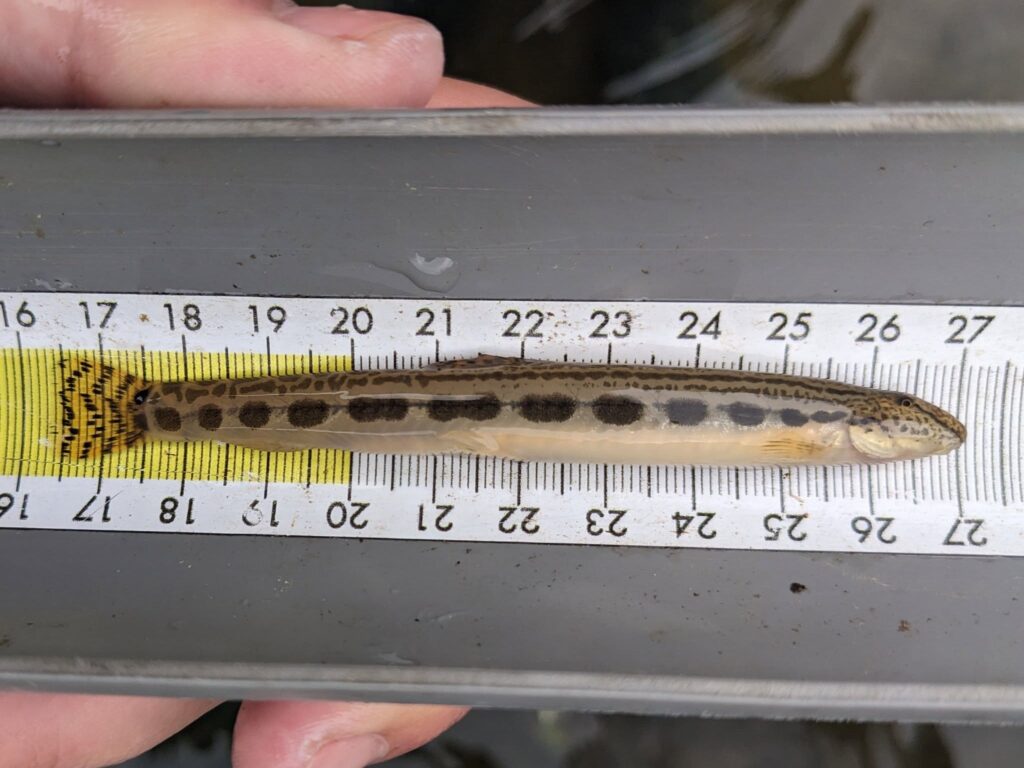
Cobitis elongata was recorded for the first time in the Cerna catchment in an area with sandy substrate, at an altitude of 86 m. A single specimen was identified, probably a female. Identification and assessment were based on photographs. Morphometric measurements were taken, including total and standard length, head and eye dimensions, pre-dorsal, pre-ventral, and pre-anal distances, body depth, and caudal peduncle length. Some values were higher than those reported from populations in the Nera River basin, although the small sample size limits interpretation. To avoid confusion with Cobitis elongatoides, identification relied on analysis of the Gambetta zones on the body flanks, supported by photographic evidence.
Fieldwork was coordinated by Andrei Togor, President of the Aqua Crisius Association, a graduate in fish farming and a specialist in ichthyology. Detailed information about the study is available in the scientific article authored by Andrei Togor, which can be consulted here.
Relevance of the discovery and scientific value
The identification of the Balkan loach in the Cerna River extends the species’ known distribution in Romania and fills a significant gap in existing faunistic data. Previous ichthyological surveys did not report this species in the area, suggesting either a recent colonisation or an earlier underestimation of local biodiversity.
The results provide a scientific basis for assessing the ecological status of aquatic ecosystems and for informing conservation measures, in a context shaped by anthropogenic pressures, including dams, river regulation, and pollution. The study also highlights the vulnerability of local fish populations and the need to maintain ecological connectivity and a near-natural hydrological regime to safeguard biodiversity in the long term.
The Balkan loach – a species with crucial ecological value
The Balkan loach (Cobitis elongata) is a native species of the Danube Basin, occurring in several South-East European countries. Its distribution is mainly associated with right-bank tributaries of the Danube. In Romania, stable populations are known from the Nera basin and the Caraș River, while recent studies confirm the persistence of the population in the Miniș River.
It is a small-bodied, bottom-dwelling fish that prefers sandy and gravel substrates and partially buries itself in the sediment. Females are generally larger than males.
The species has low economic value and is occasionally used as bait or as food for commercially valuable fish. Its importance is primarily ecological. It feeds on small invertebrates, helping regulate their populations and maintain ecosystem balance. In turn, it serves as a food source for predatory fish, waterbirds, and mammals. Its presence indicates a river with natural substrate and good ecological conditions, making it a valuable indicator of water quality.
The species is vulnerable to anthropogenic pressures, including pollution, gravel extraction, river regulation, and poaching, and therefore requires appropriate protection and management measures. According to the Romanian Red List, the species is classified as Vulnerable, due to its restricted distribution and high pressure on its habitats.
Conclusions of the Cerna River study
The fish community analysis revealed relatively high species diversity and apparent differences between free-flowing and fragmented river sections. Sensitive species were more abundant in unimpeded stretches, while sectors affected by weirs and other barriers showed reduced diversity.
These results confirm that river fragmentation affects fish migration, life cycles, and population stability. Maintaining longitudinal connectivity and an adequate ecological flow is essential for conserving aquatic biodiversity and ensuring the healthy functioning of river ecosystems. The presence of the Balkan loach in the Cerna catchment was considered likely, given its occurrence in neighbouring basins. To conserve the species and maintain its population in the Cerna basin, the preservation of natural flows and the avoidance or limitation of further hydrotechnical works are recommended.
The Open Rivers Programme and the role of Rewilding Romania in aquatic restoration
The Open Rivers Programme is a European initiative aiming to restore natural river connectivity by removing obsolete artificial barriers, such as small dams, weirs, and sluices, that fragment aquatic habitats and block species migration.
In Romania, Rewilding Romania, in partnership with the Aqua Crisius Association, is implementing the project “Identifying barriers in five catchments in the Southern Carpathians, Romania”, funded through the Open Rivers Programme. The main objective is to restore natural river flow and revitalise aquatic ecosystems in the Belareca, Ramna, Bistra, Sebeș, Feneș, and Pârâul Rece catchments.
Within this project, field teams mapped 82 barriers, documenting their locations, types, conditions, and accessibility. Most of them are degraded and no longer fulfil their original function, yet they continue to fragment habitats and restrict fish migration.
During the first project phase, completed in 2024, 20 structures were documented in the Belareca basin, and the Ramna River was designated as a priority action area due to its ecological value and high restoration potential. Seven concrete weirs built in the 1970s were selected for removal because they are currently degraded and non-functional, and they represent significant obstacles to restoring natural connectivity. The second phase, running from 2025 to September 2026, focuses on technical documentation, feasibility studies, and the subsequent removal of these barriers. This intervention will reopen approximately 22 km of river for natural migration and represents a significant step towards restoring aquatic habitats.
River connectivity – essential for aquatic biodiversity
Scientific fishing campaigns conducted by Aqua Crisius within projects developed with Rewilding Romania provide essential data on the condition of aquatic ecosystems. Results consistently show apparent differences between free-flowing and fragmented river sections, confirming the benefits of connectivity for biodiversity.
Rewilding Romania’s work focuses on assessing the impacts of barriers, preparing technical documentation for their removal, and engaging local communities in river restoration. Biological monitoring demonstrates that free-flowing river sections support higher species diversity and more stable populations.
In this context, the Cerna River study and the discovery of the Balkan loach directly support the objectives of the Open Rivers Programme and provide additional scientific evidence for prioritising river restoration. The data underline the importance of barrier removal for maintaining biodiversity and restoring natural processes in the aquatic landscapes of the south-western Carpathians.
Rewilding initiatives create the conditions for nature to regain its balance and natural functions through careful monitoring and limited intervention, only where truly necessary. We believe in a respectful relationship with nature. We do not seek to control it, but to provide the space and conditions it needs to recover and follow its natural course.
By donating, you become part of this effort and contribute directly to river restoration, biodiversity monitoring, and the collection of rigorous scientific data that support responsible decision-making.
We invite you to visit our donations page and choose how you would like to support these initiatives that give nature the chance to heal.