
The future of nature is not predetermined; it depends on the decisions we make today. Every rewilding action contributes directly to the restoration of ecosystems and to building a more balanced future.
Today, 20 March, we celebrate World Rewilding Day globally, and this year’s theme, #ChooseOurFuture, reminds us that the future of nature depends on the choices we make now. In Romania, rewilding initiatives are led by the Rewilding Romania Foundation. Yet, each of us can become a rewilder through actions and decisions that support nature restoration and the balance between people and the natural environment.
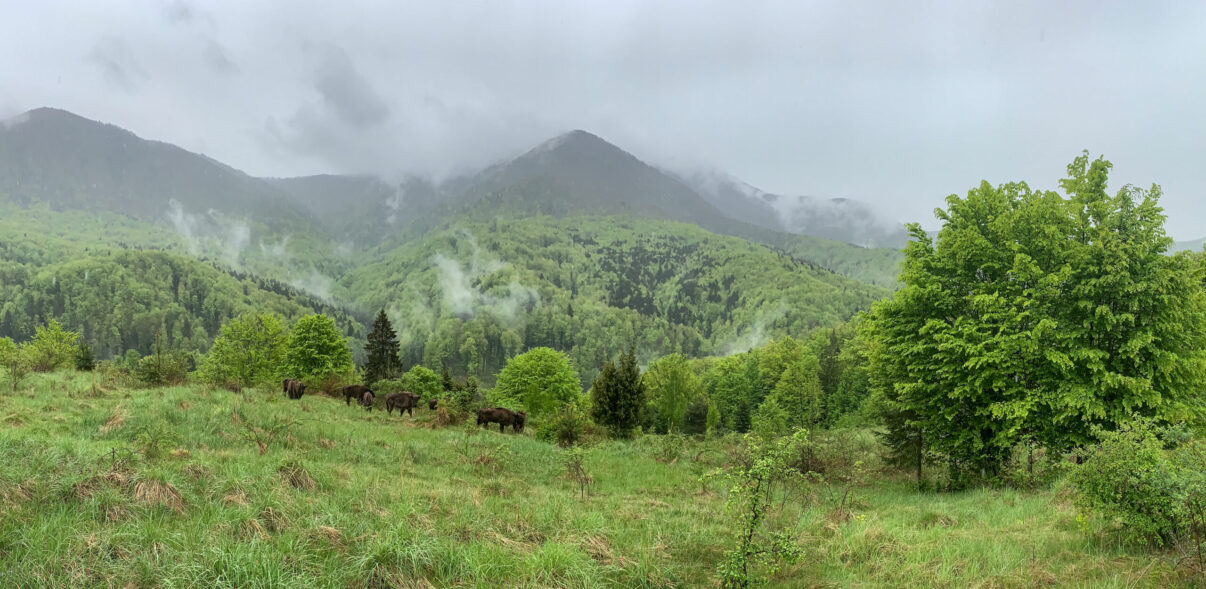
In the Țarcu Mountains, the European bison roams free
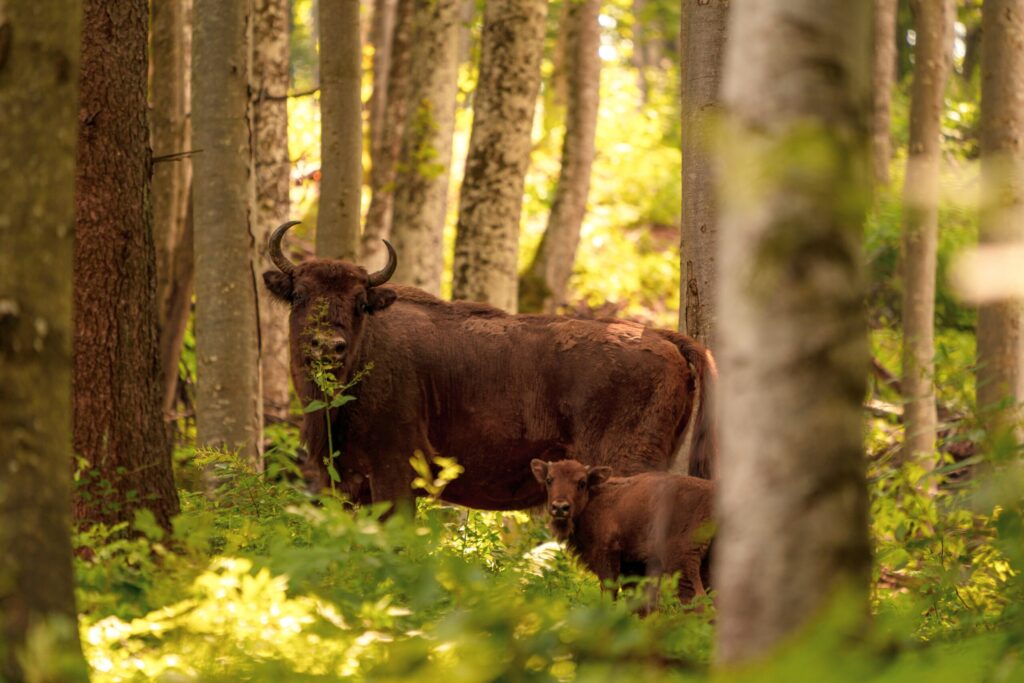
One of the core principles of rewilding is a long-term perspective. While some results may not be immediately visible, the true value of these interventions becomes evident over time, as their effects strengthen and expand. In Romania, the outcomes of rewilding efforts are already visible on the ground. A relevant example is the reintroduction of the European bison into the wild. The initiative began in 2014 with the first transport of individuals to the Armeniș area in the Țarcu Mountains. Through sustained efforts, around 250 free-roaming bison now live here. They are not artificially fed but are still carefully monitored by field teams, as the species remains vulnerable. Our objective is to increase the population to 450 individuals to ensure its genetic viability.
The reintroduction of bison in the Southern Carpathians has contributed to the restoration of essential natural processes. As a keystone species, the bison shapes the landscape through grazing and movement, supports vegetation regeneration, and creates habitats for other species, directly contributing to increased biodiversity and the healthy functioning of ecosystems.
The return of the bison has also brought visible benefits to local communities, which are developing and thriving around this initiative. The relationship between people and nature is continuously improving, and the area has become a tourist attraction, generating real economic benefits and improving the quality of life. At the same time, the presence of bison in the Țarcu Mountains is a source of local pride, as this emblematic species of the region was saved from extinction here.
Free-flowing rivers – healthy ecosystems and cleaner waters
Our efforts focus not only on strengthening bison populations, but also on restoring river connectivity in the south-western Southern Carpathians.
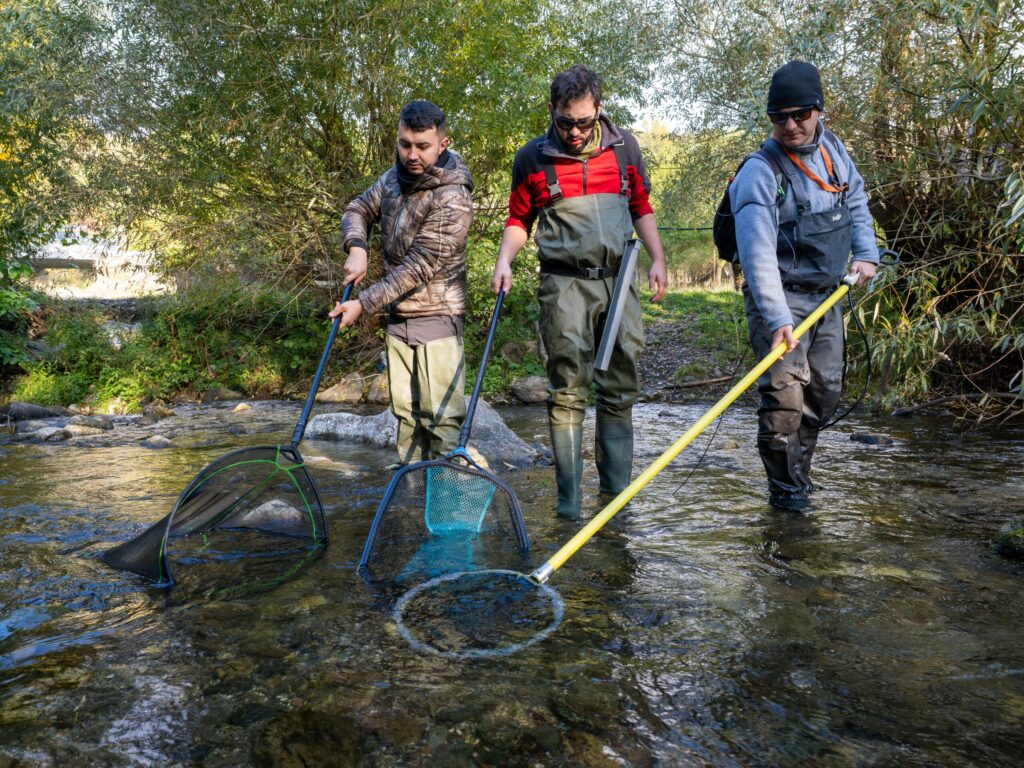
Restoring natural river processes is essential for the health of aquatic ecosystems. Through the initiative “Restoring longitudinal connectivity of the Ramna River and its tributaries”, supported by the Open Rivers Programme, Rewilding Romania, together with our partners at Aqua Crisius and in collaboration with the Administrația Bazinală de Apă Banat and the Cornereva Municipality, is analysing and preparing the removal of 22 non-functional barriers that fragment watercourses and directly affect biodiversity.
Monitoring has shown that these barriers block fish migration, reduce species diversity, and disrupt the natural dynamics of rivers. Their removal will allow rivers to flow freely, transport essential sediments for fish reproduction and riverbed stability, reduce erosion, and support groundwater levels. These interventions bring direct benefits to both nature and local communities, demonstrating that today’s actions shape a healthier future for all.
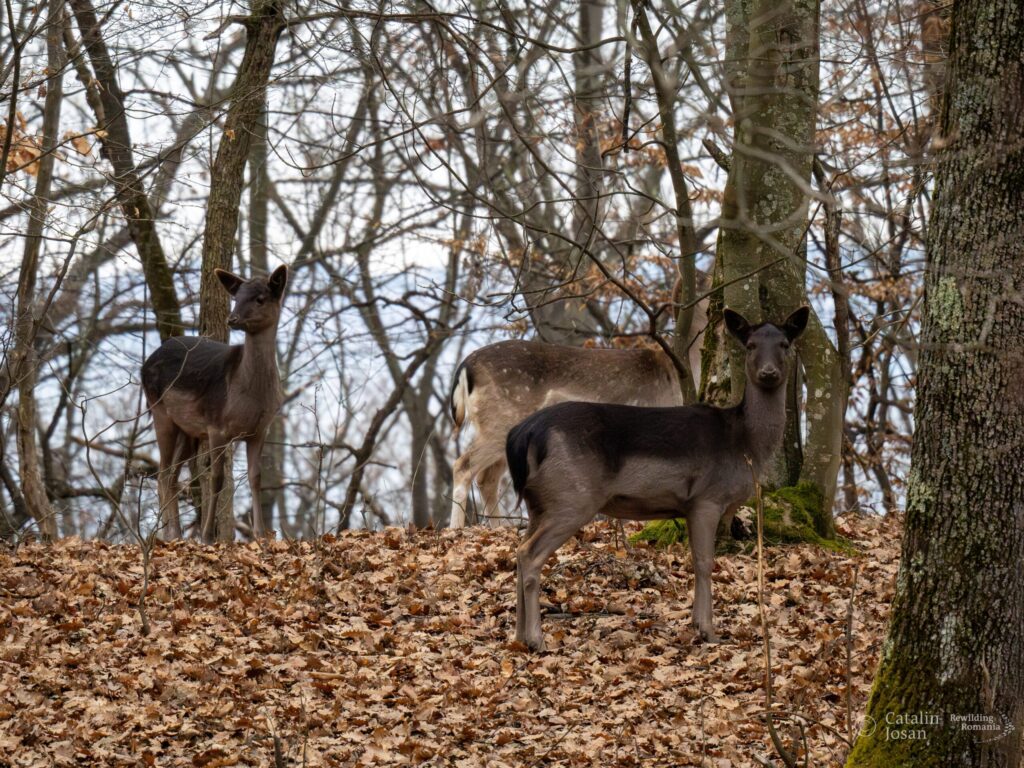
Increasing red deer and fallow deer populations in the Retezat Mountains
Rewilding actions aim to restore natural processes and, over time, allow nature to regenerate independently, without human intervention. One of the initiatives led by Rewilding Romania focuses on increasing red deer and fallow deer populations, a key action for the dynamics of mountain ecosystems. These large herbivores help maintain open landscapes and prevent excessive encroachment of shrubs and forests. At the same time, they support trophic chains by providing a stable food source for large carnivores such as brown bears, wolves, and lynx, while contributing to biodiversity and ecological balance.
By increasing deer populations, ecosystems become more stable and resilient, with benefits reflected in both nature and local communities. At the same time, Rewilding Romania and its project partners are developing sustainable management practices that create new income opportunities for local communities, such as wildlife watching and nature-based tourism. This shows that people can thrive alongside a balanced natural environment.
Rewilding in the Danube Delta
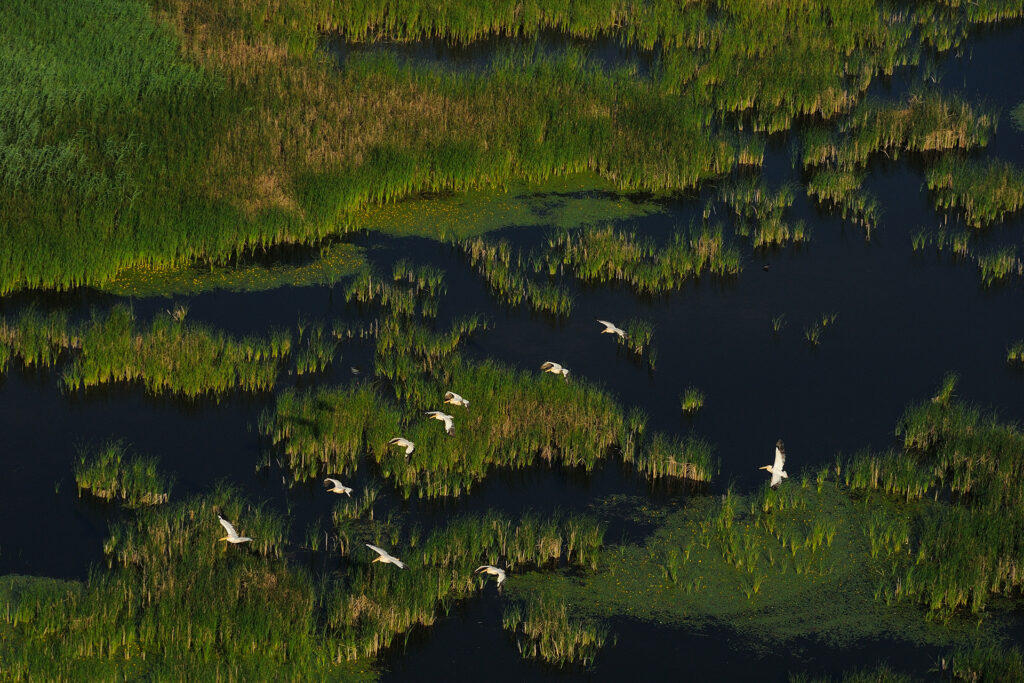
Starting in 2025, Rewilding Romania has expanded its work to the Danube Delta, an area of remarkable biodiversity but also one with clear restoration needs, motivating us to contribute to the recovery of natural processes and the protection of this unique ecosystem.
Here, our actions focus on developing rewilding tourism – a model that supports rather than exploits nature – as well as habitat restoration, wetland reconnection, the restoration of former polders, the reintroduction of key species specific to the area, promoting coexistence, and supporting local communities. These initiatives are carried out in collaboration with Rewilding Ukraine.
Nature returns where it is understood
Rewilding does not mean a nature without people, but a redefined relationship in which both the environment and communities benefit. That is why we work continuously with local communities to support these initiatives.
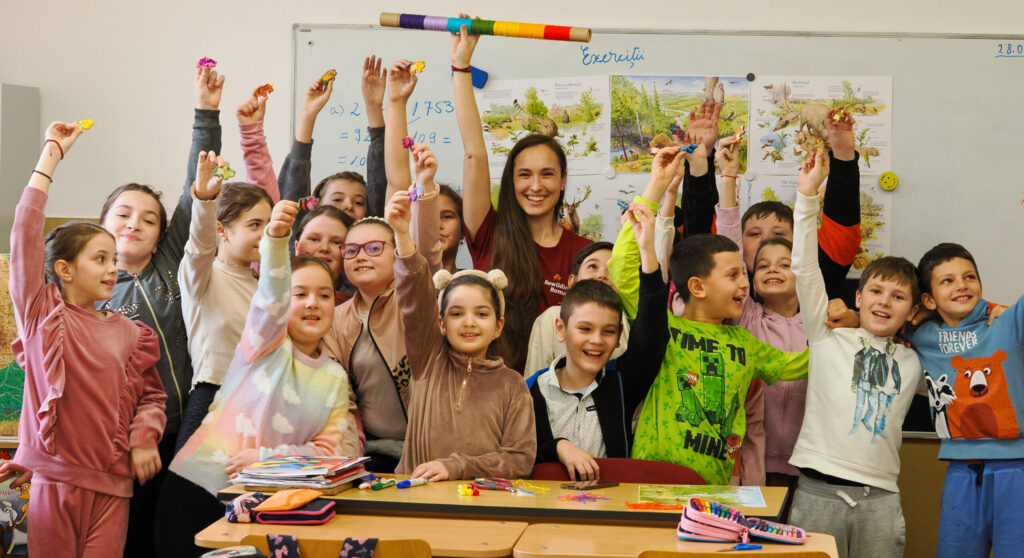
We implement concrete coexistence measures: field teams install electric fences where needed to protect households, wildlife is carefully and discreetly monitored, specially trained canine teams are used to manage bison, regular meetings are held with local people to understand their needs, and educational programmes are delivered in schools in the reintroduction areas and beyond. These actions respond to current needs while building a long-term, sustainable relationship between people and nature. Nature recovers more easily where it is understood and accepted.
Education plays a key role in this process. We educate today to benefit tomorrow from healthy, balanced ecosystems and to raise generations that understand, respect, and protect nature. Activities such as Junior Rewilders camps, school workshops, teacher training, and direct experiences in nature alongside biologists, ecologists, and rangers help children connect with the natural environment.
Rewilding does not mean a nature without people, but a renewed relationship in which communities directly benefit from healthy ecosystems, while nature is given the space it needs to regenerate.
The future of nature is a choice we make today
Rewilding initiatives do not happen only in remote or protected areas; they begin in every community. From more natural garden management to volunteering or adopting responsible behaviours in nature, every action matters. Small, repeated changes can have a significant cumulative impact.
Today we celebrate World Rewilding Day globally, and this year’s theme, #ChooseOurFuture, reflects this shared responsibility. It is not an abstract concept, but a reality built through concrete actions with visible results: more resilient ecosystems, increased biodiversity, and communities better adapted to environmental change and thriving alongside nature.
This day is an opportunity to show that nature restoration is possible, that it is our responsibility, and that results already exist. It is also a call to action.
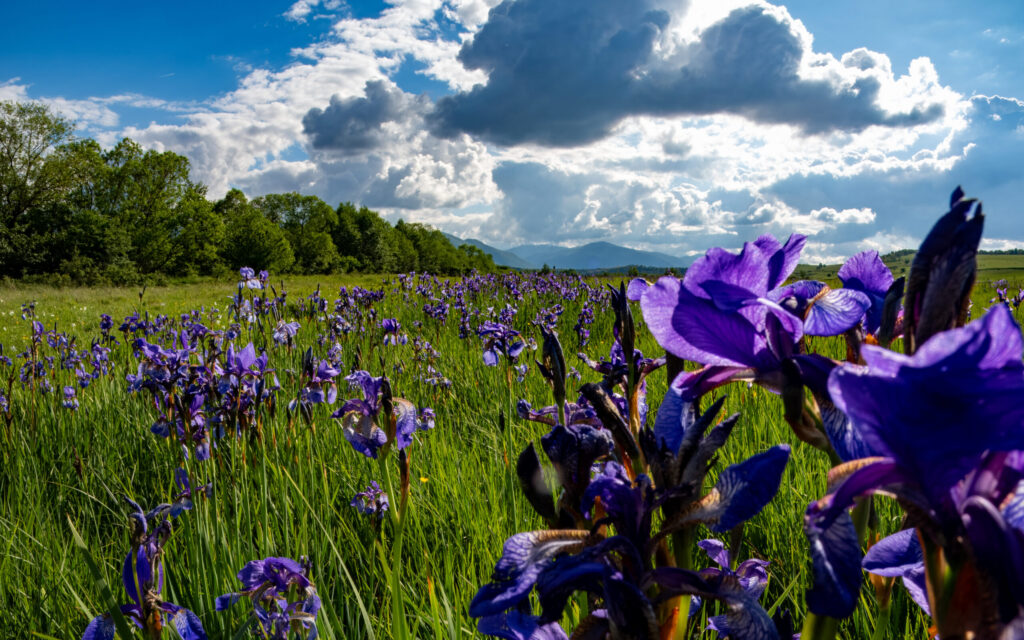
Many people are still unaware of nature’s capacity to regenerate, yet numerous real examples show that when given space and the right conditions, nature can regain its balance.
World Rewilding Day inspires us to take action. Each of us can get involved through volunteering, education, or by supporting existing initiatives. Every contribution, no matter how small, makes a difference for both nature and people.
Through rewilding, we thrive together!
