

How can we contribute to nature recovery through rewilding, and why is it important to protect wildlife species and their habitats? These questions shaped the 2026 edition of the Junior Rewilders Camp. Over five days, 17 children from the communities of Armeniș, Cornereva, and Teregova discovered nature through hands-on activities, meetings with specialists, and field experiences.
First steps into the world of rewilding
During the autumn school holiday, the 17 participants chose to spend their time closer to nature, combining discovery and learning with moments of relaxation and a break from their daily routines. The camp took place in Mălăiești, in the commune of Sălașu de Sus, Hunedoara County. Lucia Cușnir, Education and Volunteering Officer, organized it with support from colleagues from the Rewilding Romania team, who helped prepare and run the camp.
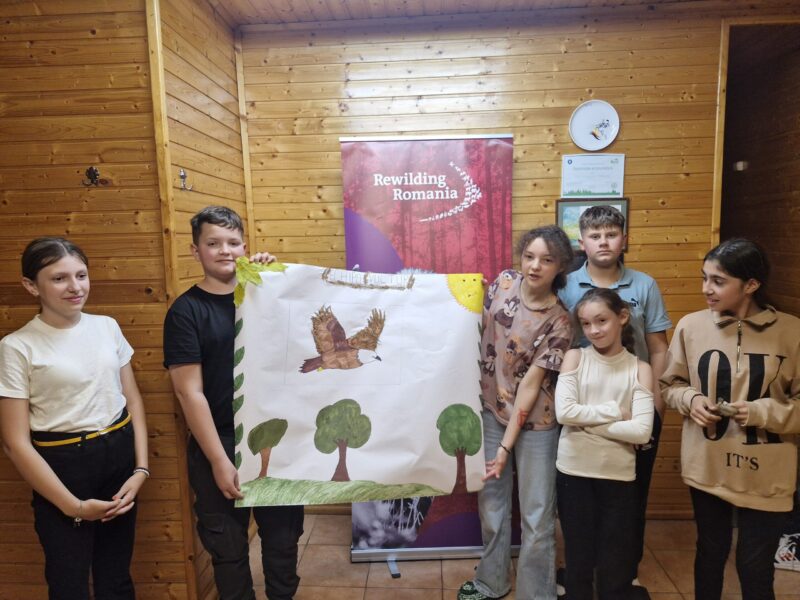
The first day focused on getting to know one another and sharing first experiences. Through outdoor activities and team games, the children discovered the role of wildlife species in nature and their importance in maintaining healthy ecosystems. Divided into three teams, the Beavers, the Bison and the Vultures, the participants put their creativity to the test by designing a flag for each group. It was an enthusiastic start, with new friendships forming and a sense of teamwork taking shape.
An important part of the day was an introduction to rewilding. The children learned what nature recovery means, why it is important to give wildlife the space and conditions it needs to thrive, and how each of us can contribute to this process. These discussions paved the way for the experiences that followed, encouraging them to look at nature with greater curiosity and to understand the connection between people and the natural world.
From the hidden life of rivers to local products
On the second day of the camp, the children visited the Retezat National Park Administration, where they learned more about the role and importance of protected natural areas. They also discovered what the work of rangers involves, an essential activity for monitoring and protecting biodiversity, yet one that is often little understood by the wider public.
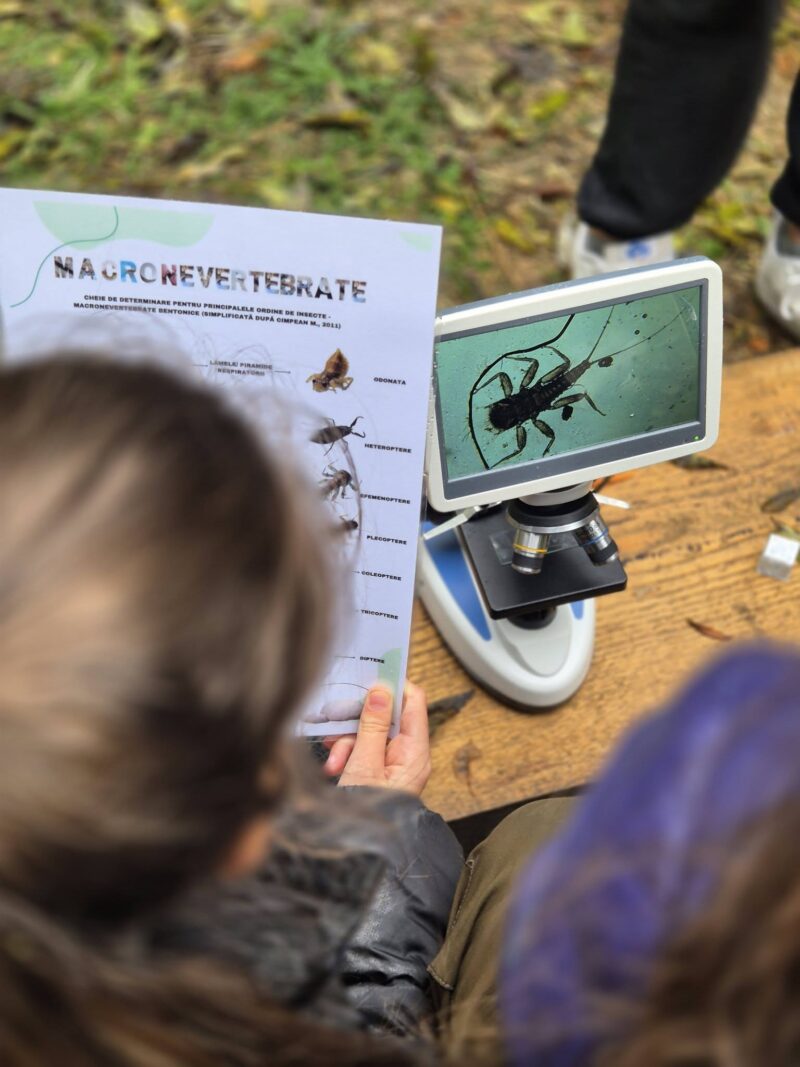
Although they often go unnoticed, small creatures play an important role in aquatic ecosystems. To help the children discover them, we organized a practical workshop entitled “Life in the River”, led by Alexandra Negruț, Senior Rewilding Officer and ecologist at Rewilding Romania. By collecting samples from the river and examining them under microscopes, the participants discovered the fascinating and diverse world of aquatic macroinvertebrates. They learned that these small organisms, although often overlooked, play an essential role in river ecosystems, and that their presence and diversity can provide valuable information about river health, as they are used as bioindicators of water quality.
The program also included an interactive photography workshop organized with our friends from EcoEdu Natura. The children had the opportunity to see nature from a different perspective and discover how photography can become a tool for observation and a way to connect more closely with the natural world.
There was also time for physical activity: together with our colleague Eugen Toncea, who is also a member of the ZMBR team, the participants enjoyed a gentle outdoor run.
At the end of the day, the children enjoyed a tasting workshop organized together with local producer Cămara din Totești. It was a wonderful opportunity to discover the richness of local food traditions and the authentic flavors of products made from natural ingredients, from jams to zacuscă, a traditional Romanian vegetable spread. Alongside these local specialties, the children also enjoyed Mero Apple Spritzer, a drink produced by Casa Despi using apples harvested from orchards in the bison reintroduction area. As a coexistence product, Mero also gave the children an opportunity to see how local resources can support both communities and coexistence between people and wildlife.
From regenerative agriculture to bison and volcanoes
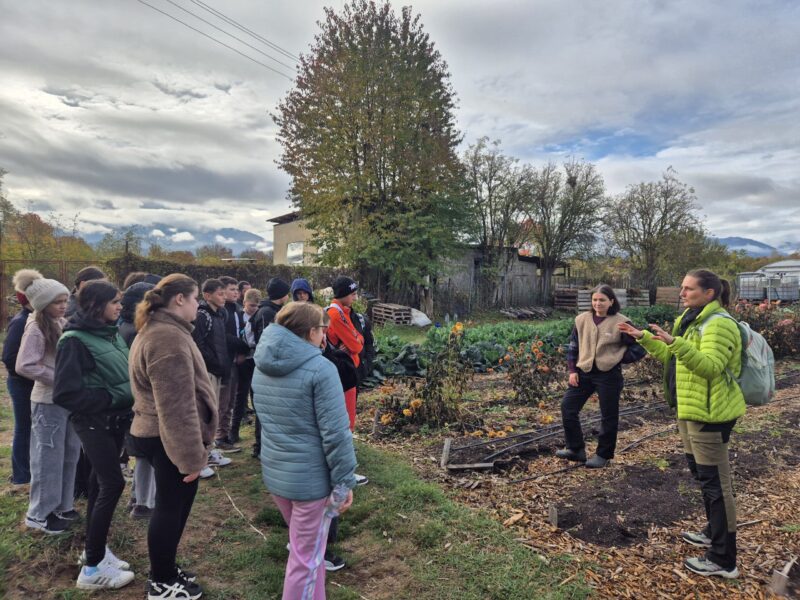
The third day brought new experiences, beginning with a visit to the farm of Roxana Zaha, an ambassador for the LIFE with Bison project. A farmer and anthropologist, Roxana explained to the children how we can work in harmony with nature and practice rewilding, even in our own gardens. On her farm, she does not use pesticides. She follows the principles of regenerative agriculture, an approach that improves soil health, supports biodiversity, and encourages farming practices that work more closely with natural processes.
For children from rural communities, where agriculture is part of everyday life, this experience was particularly valuable. Roxana’s example offered them a new perspective on how we can cultivate the land while caring for nature, helping them understand that the choices we make in our own gardens or orchards can contribute to healthier, more balanced ecosystems.
The next stop was the Hațeg-Slivuț Bison Reserve, where the children could observe bison up close and learn more about their behavior, feeding habits, and ecological importance. Accompanied by Florin Halăustauan (Hombre), Rewilding Officer at Rewilding Romania and Romania’s first ranger, the children learned about bison directly from someone closely involved in the species’ reintroduction in the Țarcu Mountains since 2017. Drawing on his field experience, Hombre spoke to them about bison behavior, monitoring, and the challenges of bringing these large herbivores back into the wild.
At the Visitor Center of the Hațeg Country UNESCO Global Geopark and Casa Vulcanilor (House of Volcanoes), managed by the Drag de Hațeg Association, the children explored the fascinating world of fossils and volcanoes. They learned how geological processes have shaped the landscapes we enjoy today and discovered the richness of Hațeg Country’s natural heritage.
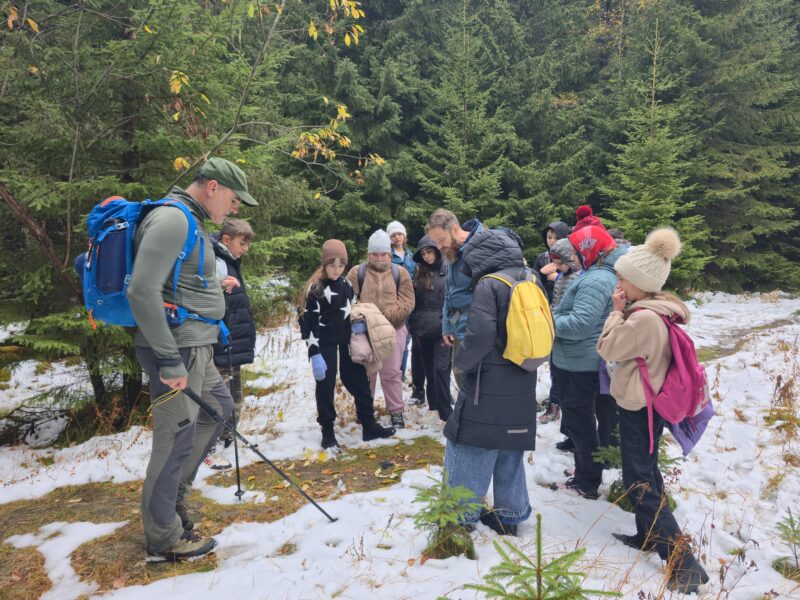
In the field with Rewilding Romania specialists
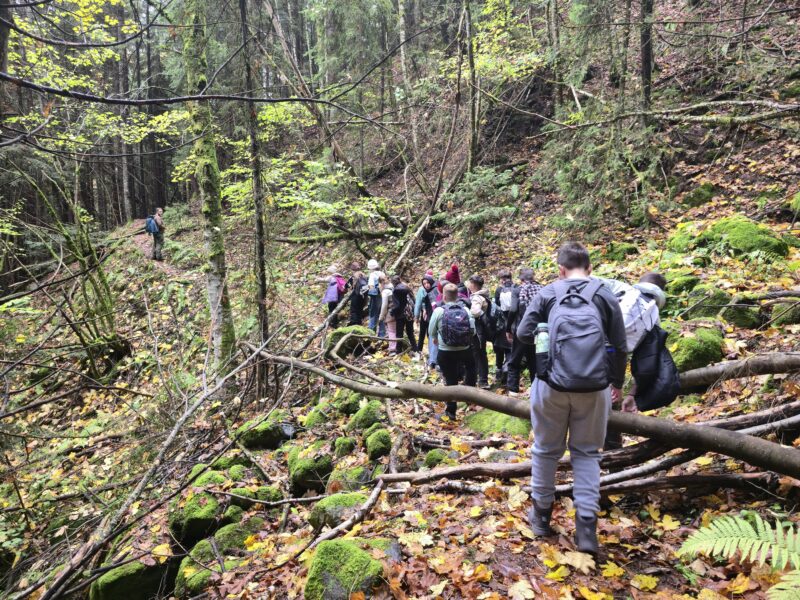
On the fourth day, the participants set off on a hike through Retezat National Park, accompanied by our colleagues Cătălin Josan and Florin Halăustauan, Rewilding Officers at Rewilding Romania. Their field experience and knowledge turned the hike into an excellent learning opportunity. The children gained interesting insights into local wildlife, the species that inhabit this region, and the relationships between these species and their habitats.
Direct contact with nature allowed the participants to observe and better understand what they had learned in the previous days. Every species, no matter how large or small, plays an important role in an ecosystem. The disappearance of one species can affect the natural balance and the lives of other creatures that depend on it. The children came to understand that protecting biodiversity means more than caring for particular animals or plants: it means protecting the entire web of life of which we, too, are a part.
The final day of the camp combined physical and educational activities. The children had fun tackling obstacle courses, trying out the zip line and giant hammock at Cafeneaua cu Hamace, and taking part in games that tested the knowledge they had gained about wildlife species.
The program also included a hike along the “Music of Nature” Themed Trail in the village of Peștera, where the children discovered how much a place can tell us when we stop to listen and pay attention to nature’s sounds.
The evening ended around the campfire with Arina, a Rewilding Romania volunteer, after five days filled with activities, new experiences, and moments shared together.
Investing in nature education and future generations
We believe that connecting with nature begins with experiences that spark curiosity, encourage questions, and help children better understand the world around them. Through the Junior Rewilders Camp, we give children from local communities the opportunity to discover the natural richness of the places where they grow up and deepen their understanding of the relationship between people and the wild. For us, few things are more rewarding than seeing their enthusiasm, curiosity, and joy as they embrace each new experience.
This connection with nature is particularly important in communities in the Țarcu Mountains, where the return of bison brings new opportunities, but also responsibilities.
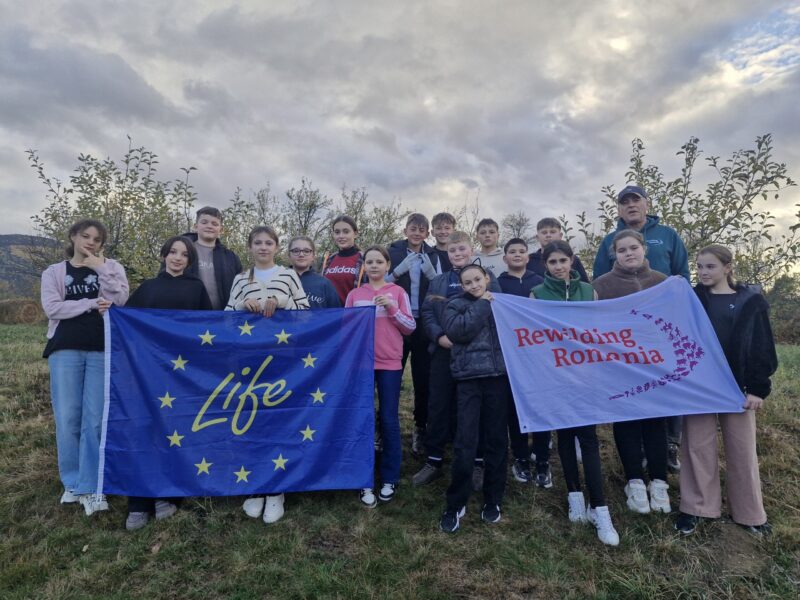
Through the LIFE with Bison project, we contribute to both the recovery of free-roaming bison populations and the creation of opportunities for local communities to thrive alongside wildlife. Educating the younger generation is essential to this effort, as understanding nature and each species’ role can lay the foundation for harmonious, long-term coexistence.
The first edition of the Junior Rewilders Camp took place in 2023, and since then we have continued to offer children opportunities to learn and gain first-hand experiences in nature. We hope this initiative will continue to grow year after year, bringing more young people closer to the natural world and encouraging them to become responsible and actively engaged in its future.
The Junior Rewilders Camp is one of the activities carried out under LIFE with Bison, a project co-funded by the European Union through the LIFE Program and implemented in the Natura 2000 site ROSCI0126 – Țarcu Mountains by Rewilding Europe, Rewilding Romania, WWF Romania, the Institute for Research and Development in Hunting and Mountain Resources, and WeWilder by WWF, in collaboration with the local authorities of Armeniș, Teregova and Cornereva.
