

From exploring the biodiversity of the Danube Delta to discovering the role of bison in the Southern Carpathians’ ecosystems, Rewilding Romania’s educational activities as part of the Different School Week program gave pupils the chance to learn about nature through observation, interactive games, and hands-on experiences.
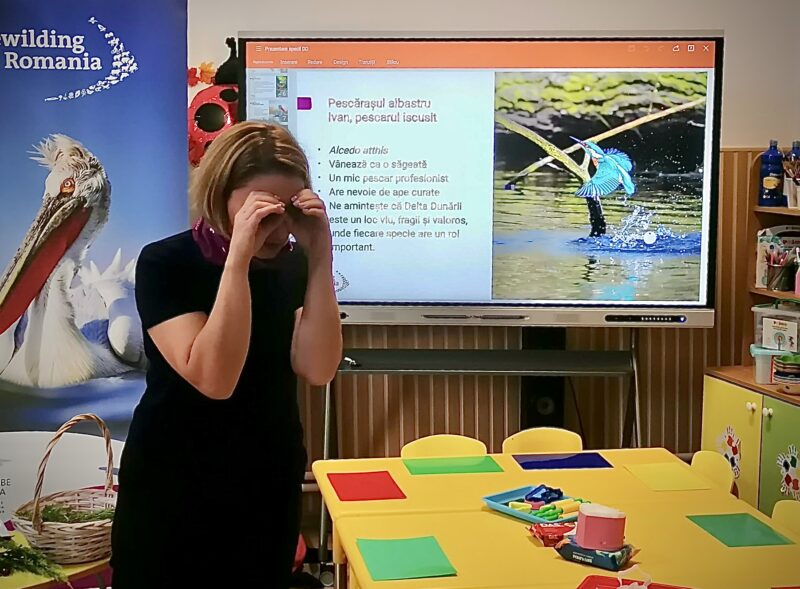
Nature education is an important part of Rewilding Romania’s work with local communities. Through workshops, games, and outdoor experiences, we aim to help children discover the diversity of flora and fauna around them, identify species, and understand their relationships and the ecosystems they inhabit. At the same time, we encourage them to recognize the role they can play in protecting and restoring nature.
The Different School Week and Green Week programs offer valuable opportunities to engage pupils and provide educational experiences beyond the classroom.
Rewilding Romania works in two regions: the Southern Carpathians and the Danube Delta. In both areas, our teams prepared workshops tailored to the children’s ages and each region’s natural characteristics.
Discovering biodiversity through exploration and observation
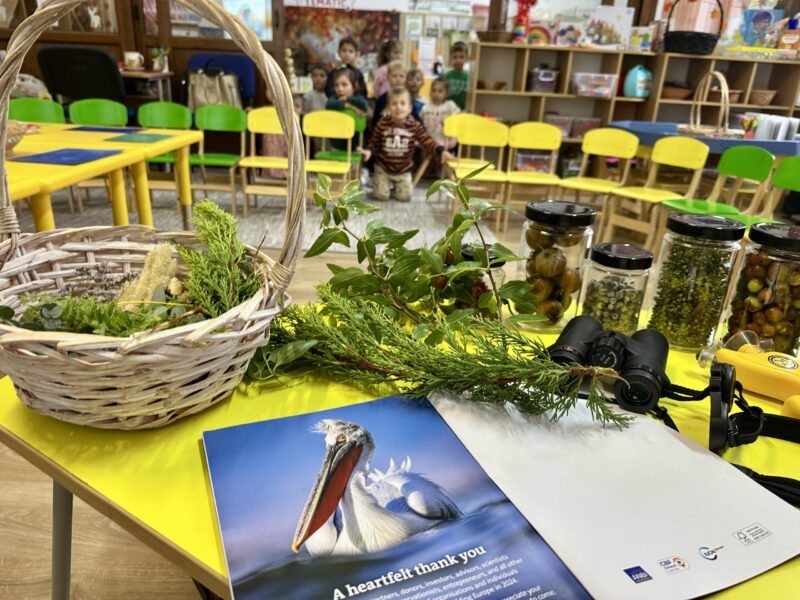
In the Danube Delta, about 60 children from Jurilovca, Mahmudia, C.A. Rosetti, Letea, and Periprava took part in a series of educational workshops organized by the Rewilding Romania team. In classrooms and outdoors, the children had the chance to discover the Delta’s wildlife and natural environment through interactive games, observation, and practical activities that sparked their curiosity and eagerness to learn more.
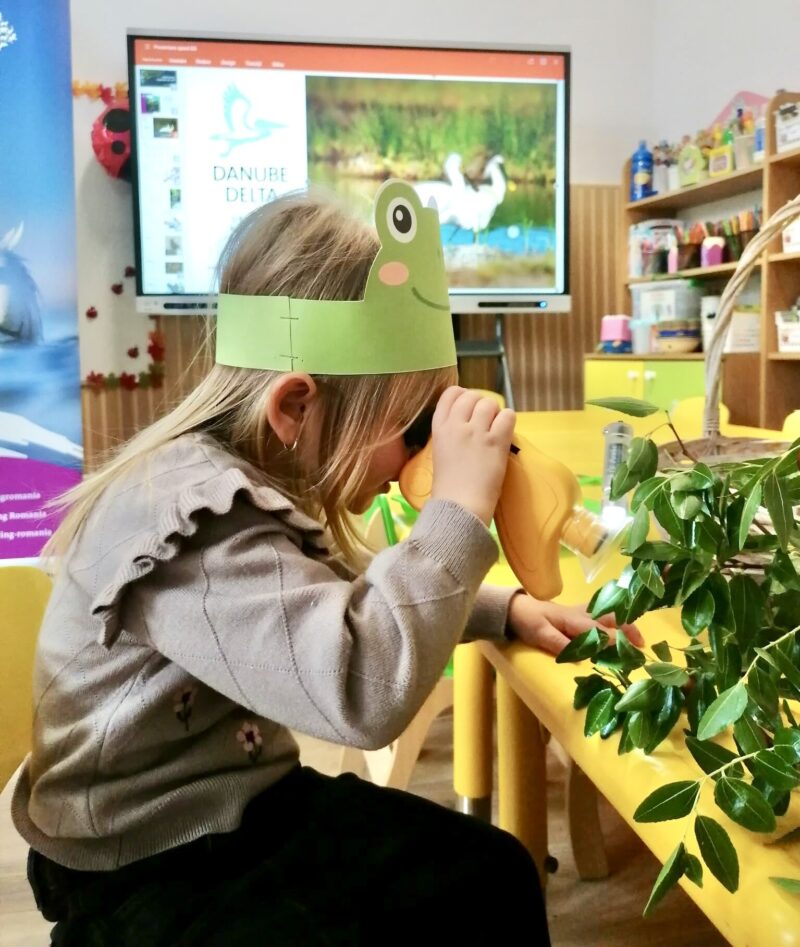
From recognizing birds by their calls and observing nature through binoculars to discovering almost invisible details with a microscope, the children were encouraged to look more closely at the world around them. They examined plants, fruits, and other natural materials, took part in educational games, and used their creativity during modeling workshops. These experiences encouraged them to ask questions, notice details, and learn through their own observations.
Beyond learning about individual species, the workshops also helped the children understand the connections between living things and their environment. Through exercises and interactive games, they discovered how water, plants, insects, birds, and people are connected, and why these relationships matter to the functioning of the Delta’s ecosystems. They also discussed how nature can regenerate when given the space and conditions it needs.
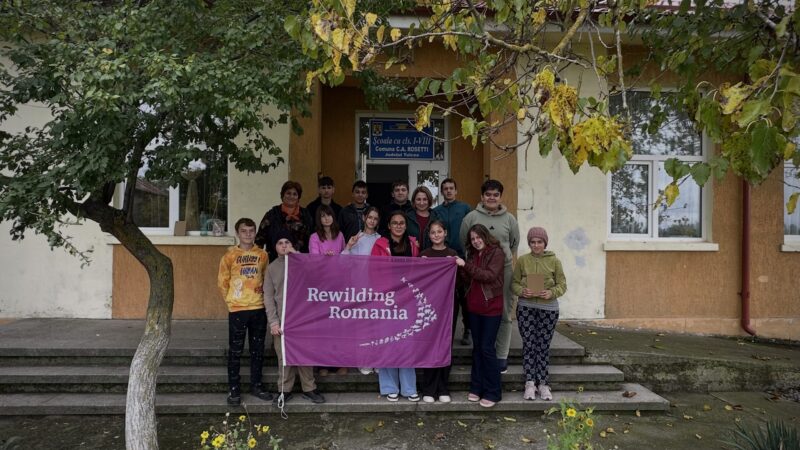
Older pupils were encouraged to turn what they learned into project ideas for protecting nature, which they could develop in their schools and communities. In this way, the workshops were not only an opportunity to discover the Delta’s biodiversity, but also to reflect on how everyone can contribute to protecting it, even through small actions.
We were pleased that Lipovenesc, a traditional household and Local Gastronomic Point in Rewilding Romania’s partner network, hosted some of the activities. This welcoming place gave the children space to work together, use their imagination, and enjoy time outdoors, surrounded by the Delta’s nature and traditions.
From the food chain to the role of bison in nature
In the Southern Carpathians, the first activities organized as part of Different School Week took place at Sfântul Dimitrie Technological High School in Teregova, one of the communities in the bison reintroduction area of the Țarcu Mountains. As always, we were delighted to return and reconnect with the pupils and teachers with whom we regularly organize nature education activities.
Together with our partners from Altitudine Association, we prepared a series of workshops that gave children the opportunity to learn more about biodiversity, the roles of different species in nature and the processes that support ecosystem functioning. Through interactive exercises and teamwork, pupils learned how food chains work and how we can help restore natural balance through rewilding and reintroducing species that have disappeared from certain areas, such as bison. We also discussed rangers’ work, wildlife monitoring, and the importance of habitat protection.
Bison held a special place in our discussions, having returned to the Țarcu Mountains through reintroduction efforts that began in 2014. Pupils learned more about this large herbivore’s role in the ecosystem and how its presence supports the recovery of natural processes. We also discussed the relationship between people and wildlife, and the importance of coexistence between people and bison in communities within the reintroduction area.
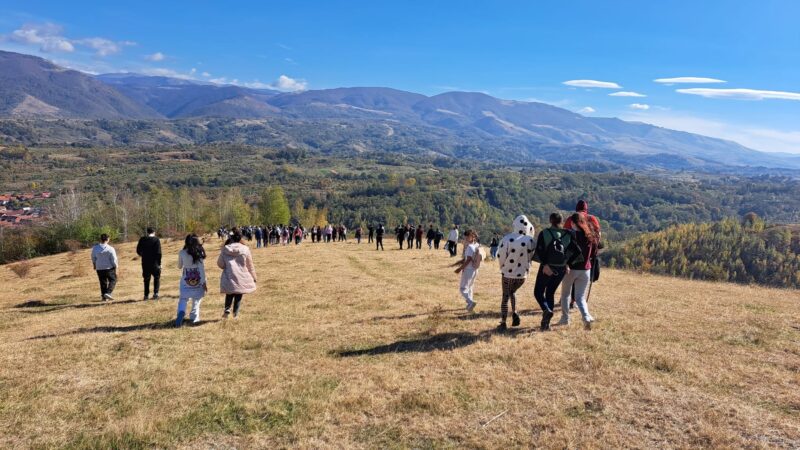
The experience continued beyond the classroom with a hike joined by the school’s teachers. On a sunny autumn day, we walked together along the hills and paths of the surrounding area, enjoying the landscapes of the Țarcu Mountains and the time spent outdoors. It was a chance to continue our conversations in a different setting and observe the nature around the community.
Meetings like these help us strengthen our relationships with schools and young people in the bison reintroduction area, allowing us to respond to their curiosity and explore topics related to the biodiversity of the places where they are growing up.
Nature education begins in local communities
Although the activities in the Danube Delta and Southern Carpathians focused on topics specific to each region, they shared the same objective: to help children discover and better understand the nature around them.
For Rewilding Romania, these collaborations represent a long-term investment in the communities we work alongside. By involving teachers and meeting regularly with pupils, we hope to ensure nature education goes beyond one-off events and becomes an ongoing priority, supported both in and out of school.
We believe that nature education begins at an early age and that access to accurate information, combined with hands-on experiences, helps children better understand the world around them. Through every meeting and educational activity, we hope to contribute to raising generations who are more aware, more curious, and more actively involved in protecting and restoring nature.
